
What Is an MSK Ultrasound Scan? A Complete Guide for Patients
What Is an MSK
Ultrasound Scan?
MSK ultrasound scan is a diagnostic imaging examination that uses sound waves to create
real-time images of muscles, tendons, ligaments, joints, nerves and surrounding
soft tissues.
Unlike an X-ray,
ultrasound does not use ionising radiation. A sonographer or appropriately
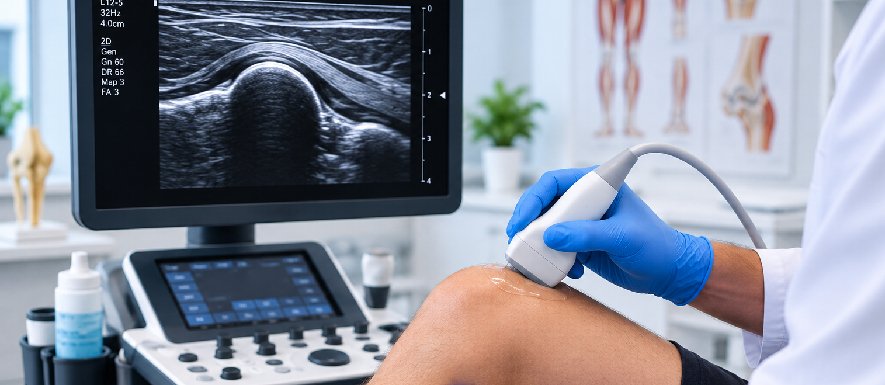
trained clinician moves a small handheld transducer over the skin using
ultrasound gel to produce images of the area being assessed.
The British Medical
Ultrasound Society (BMUS) explains that musculoskeletal ultrasound can be used
to examine structures such as muscles, tendons, ligaments, joints and soft
tissues. It may also involve assessing an area while the patient moves a limb
or joint.
What Can an MSK
Ultrasound Scan Detect?
A musculoskeletal ultrasound scan is
particularly useful for assessing soft-tissue structures close to the skin.
Depending on the body area and clinical question, it can help identify or
assess:
- Tendon tears and tendinopathy
- Muscle tears and other muscle injuries
- Ligament sprains or tears
- Bursitis and fluid collections
- Joint effusions
- Inflammation
- Some nerve entrapments
- Soft-tissue masses and cysts
- Certain sports-related injuries
- Changes affecting superficial joints and surrounding tissues
Radiology Info, a patient information resource produced by the American
College of Radiology and Radiological Society of North America, lists tendon
tears, muscle injuries, ligament injuries, bursitis, joint fluid and nerve
entrapment among applications of musculoskeletal ultrasound.
Which Body Areas
Can Be Scanned?
MSK ultrasound can be used for many areas of the body, depending on the
clinical indication.
Insight Health Services' MSK ultrasound service covers the shoulder,
elbow, wrist, hand, fingers, hip, knee, ankle, foot and toes, as well as
upper- and lower-limb muscle injuries.
What Happens During
an MSK Ultrasound Scan?
An MSK ultrasound appointment is generally straightforward and
non-invasive.
The patient usually lies or sits in a position that gives the clinician
access to the affected area. Ultrasound gel is placed on the skin, and the
transducer is gently moved over the area being examined.
The clinician may ask you to:
- Move a joint or limb
- Change position
- Contract a muscle
- Repeat a particular movement
- Compare the symptomatic side with the opposite side
This is known as dynamic
ultrasound assessment. It can allow certain structures to be observed
while they move rather than only when they are stationary.
At Insight Health Services, dynamic
assessment is included where clinically appropriate, and patients receive
digital scan images and a detailed report as part of the MSK ultrasound
service.
How Should You
Prepare for an MSK Ultrasound?
One advantage of an MSK scan is that special preparation is usually not required.
BMUS states that no special preparation is normally required for
musculoskeletal ultrasound. Patients should wear clothing that allows easy
access to the area being examined.
Before your appointment, it is sensible to:
- Wear loose, comfortable clothing.
- Bring details of previous scans or relevant medical reports.
- Tell the clinician about previous injuries or treatments.
- Bring a list of medications if an ultrasound-guided injection is
also being considered.
- Mention relevant allergies or medical conditions.
Insight Health Services specifically advises patients to wear
comfortable, loose-fitting clothing and bring previous scan or treatment
information where available.
An external ultrasound scan should not normally be painful, although
pressure from the probe can feel uncomfortable when the area is already tender
or inflamed. The NHS notes that ultrasound probes can cause discomfort when
pressure is applied to a painful area.
Benefits and
Limitations of MSK Ultrasound
Benefits
- No ionising radiation: Ultrasound
uses sound waves rather than X-rays.
- Real-time imaging: Structures
can be assessed while moving.
- Excellent for many superficial soft tissues: Tendons, muscles and ligaments can be visualised effectively.
- Generally comfortable: Most external
ultrasound examinations are non-invasive.
- Targeted assessment: The clinician
can focus on the area relevant to the patient's symptoms.
- Useful for guided procedures:
Ultrasound can assist with image-guided procedures where clinically
appropriate.
Limitations
- Ultrasound cannot see through bone to assess structures inside it.
- Deep structures may be difficult to visualise.
- Some internal joint abnormalities may require MRI or another
imaging test.
- Findings can include age- or activity-related changes that are not
necessarily the cause of pain.
- The quality and usefulness of the examination depend on appropriate
clinical assessment and practitioner expertise.
Private MSK
Ultrasound in the UK
For patients considering a private MSK ultrasound UK service,
the main considerations should be clinical quality, practitioner expertise,
appropriate equipment, reporting and continuity of care.
Insight Health Services is a CQC-regulated independent healthcare clinic
in Walsall. Its MSK team includes CSP Chartered Physiotherapists and
HCPC-registered Senior Sonographers.
The clinic currently lists its MSK ultrasound appointment as
approximately 45 minutes, with a
listed price of £160. The
service includes a diagnostic scan, assessment of relevant soft tissues, a
detailed report and digital images.
For patients who may benefit from rehabilitation following assessment,
Insight Health Services also provides clinical physiotherapy and exercise rehabilitation, including
movement assessment and personalised rehabilitation programmes.
Patients can also review the clinic's musculoskeletal ultrasound scan service for
current appointment and service information.
How Are MSK
Ultrasound Results Used?
The purpose of an MSK scan is not simply to produce an image. The
findings can help a healthcare professional understand whether the symptoms are
consistent with a particular tendon, muscle, and ligament, joint or soft-tissue
problem.
Depending on the findings, the next step may include:
- Physiotherapy or exercise rehabilitation
- Activity modification
- Further clinical assessment
- Medication or other conservative treatment
- An additional imaging test such as MRI
- Referral to an appropriate specialist
- An ultrasound-guided procedure where clinically appropriate
The NHS explains that ultrasound results may be provided immediately in
some circumstances or may require reporting and follow-up depending on why the
scan was performed.
Insight Health Services states that its MSK service includes advice
regarding findings and recommended next steps, with ultrasound-guided injection
available separately where clinically appropriate.
Frequently Asked Questions
What is an MSK
ultrasound scan?
An MSK ultrasound scan is a diagnostic examination that uses
high-frequency sound waves to create real-time images of muscles, tendons,
ligaments, joints and other soft tissues. It is commonly used to investigate
musculoskeletal pain and injuries.
What can an MSK
ultrasound scan detect?
An MSK ultrasound can help assess tendon tears, tendinopathy, muscle
injuries, ligament problems, bursitis, joint fluid, inflammation and some nerve
entrapments. The exact conditions that can be identified depend on the body
area and clinical question.
Is an MSK
ultrasound scan painful?
Most external ultrasound scans are not painful. However, the probe may
cause temporary discomfort if pressure is applied to an already painful or
inflamed area.
Do I need to
prepare for an MSK ultrasound scan?
Usually, no special preparation is required. Wear loose clothing that
allows easy access to the area being examined and bring relevant previous scan
reports or treatment information if available.
Does an MSK
ultrasound scan use radiation?
No. Diagnostic ultrasound uses sound waves and does not use ionising
radiation. This distinguishes ultrasound from imaging techniques such as X-rays
and CT scans.
Is MSK ultrasound
better than MRI?
Neither test is universally better. MSK ultrasound is particularly
useful for superficial soft tissues and real-time movement, while MRI is often
more suitable when deeper structures, bone marrow or internal joint anatomy
need detailed assessment.
How long does an
MSK ultrasound scan take?
The appointment length depends on the body area and clinical assessment
required. Insight Health Services currently lists its MSK ultrasound
appointment as approximately 45 minutes.
Conclusion
An MSK ultrasound scan is a useful, non-invasive diagnostic tool for
assessing many muscles, tendons, ligaments, joints and other soft-tissue
problems. Its ability to provide real-time and dynamic imaging makes it
particularly valuable for selected musculoskeletal conditions, although MRI or
other investigations may be more appropriate for deeper or internal structures.
If you have persistent joint, tendon, muscle or soft-tissue pain and
believe diagnostic imaging may be appropriate, consider discussing your
symptoms with a qualified healthcare professional. For patients seeking private
diagnostic imaging in the West Midlands, you can explore Insight HealthServices' MSK ultrasound scan in Walsall and review the current
appointment information before booking.
Keep Reading

Private Blood Tests in Walsall: Complete Guide to Blood Testing, Costs & Results
What Are Private Blood Tests in Walsall? Privateblood tests Walsall is a service through which individuals can arrange selected blood tests priv...

Private Ultrasound Scan Birmingham: Everything You Need to Know Before Booking
What Is a Private Ultrasound Scan in Birmingham?A private ultrasound scan Birmingham is an ultrasound examination provided by an independent health...

Physiotherapy in Walsall: A Complete Guide to Pain Relief, Injury Recovery and Rehabilitation
What Is Physiotherapy?Physiotherapy is a healthcare profession that helps people restore movement, manage physical symptoms and enhance their abilit...